












In HYROX, performance is not just about how strong your legs are or how big your muscles are. It is about how well your body can regulate itself under load. As the intensity increases, the breath can become faster and more shallow, carbon dioxide levels rise, and the sensation of breathlessness builds. This is not just discomfort: it is a signal from your body encouraging you to slow down.

The structure of HYROX makes the challenge even more demanding. You are constantly shifting between steady aerobic work like running or rowing, and high-intensity efforts like sled pushes and burpees. Each transition challenges your breathing in a different way. Without control, this can lead to erratic breathing, slower recovery, and a gradual drop in performance.
Research shows that the respiratory system plays a direct role in how effort is experienced. When breathing muscles fatigue, the body prioritises them by redirecting blood flow away from the limbs at work. This mechanism, known as the respiratory metaboreflex, can accelerate fatigue in the legs and limit endurance capacity. In simple terms, poor breathing has a negative impact on your performance.
One of the biggest levers you can pull is improving your breathing mechanics. Switching from shallow breathing to diaphragmatic breathing, where the breath is driven deeper into the lungs, allows for better oxygen uptake, more stable energy output, and improved control throughout the competition.
CO₂ tolerance is another key piece. The urge to breathe is largely driven by rising carbon dioxide, not falling oxygen. If your tolerance is low, you will feel out of breath earlier than necessary. But breath training can help control this system, allowing you to stay composed at higher intensities and recover faster between efforts.
During HYROX, your breathing also needs to match the movement at various stations. During cyclical efforts like running, rowing, or SkiErg, syncing your breath to your rhythm helps maintain pacing and efficiency. For example, inhaling on recovery and exhaling on effort. In strength-based movements like sled pushes or farmers carries, a deep breath and brief brace creates stability and power, followed by a controlled exhale to avoid unnecessary tension.
In high-fatigue movements like burpees or wall balls, breathing control becomes even more important. A forceful exhale during the effort phase and a quick, controlled inhale during reset can help maintain your rhythm and delay fatigue. Letting breathing become erratic here is often what causes performance to fall apart later in the day.
Breathing is also your fastest recovery tool. Between stations, slowing the breath can quickly help bring the heart rate down and give you control back. Techniques like diaphragmatic breathing can help you reset before the next effort and maintain a faster pace across the race.
Preparing for HYROX? Use these breathing tips:
-
Running: Use a steady rhythm (such as 3 steps inhale, 2 steps exhale) and adjust as the intensity rises
-
Rowing / SkiErg: Inhale during recovery and exhale during the drive phase to stay efficient
-
Sled Push / Pull: Take a deep diaphragmatic breath before initiating, brace, then exhale slowly through the effort
-
Burpees: Exhale forcefully on the jump, inhale quickly as you reset - avoiding erratic breathing
-
Wall Balls: Inhale on the squat, exhale on the throw to maximise power and rhythm
-
Farmers Carry / Lunges: Keep breathing relaxed, steady, and controlled - avoiding shallow chest breaths
-
Between stations: Focus on long exhales to lower your heart rate quickly and regain control on your breathing
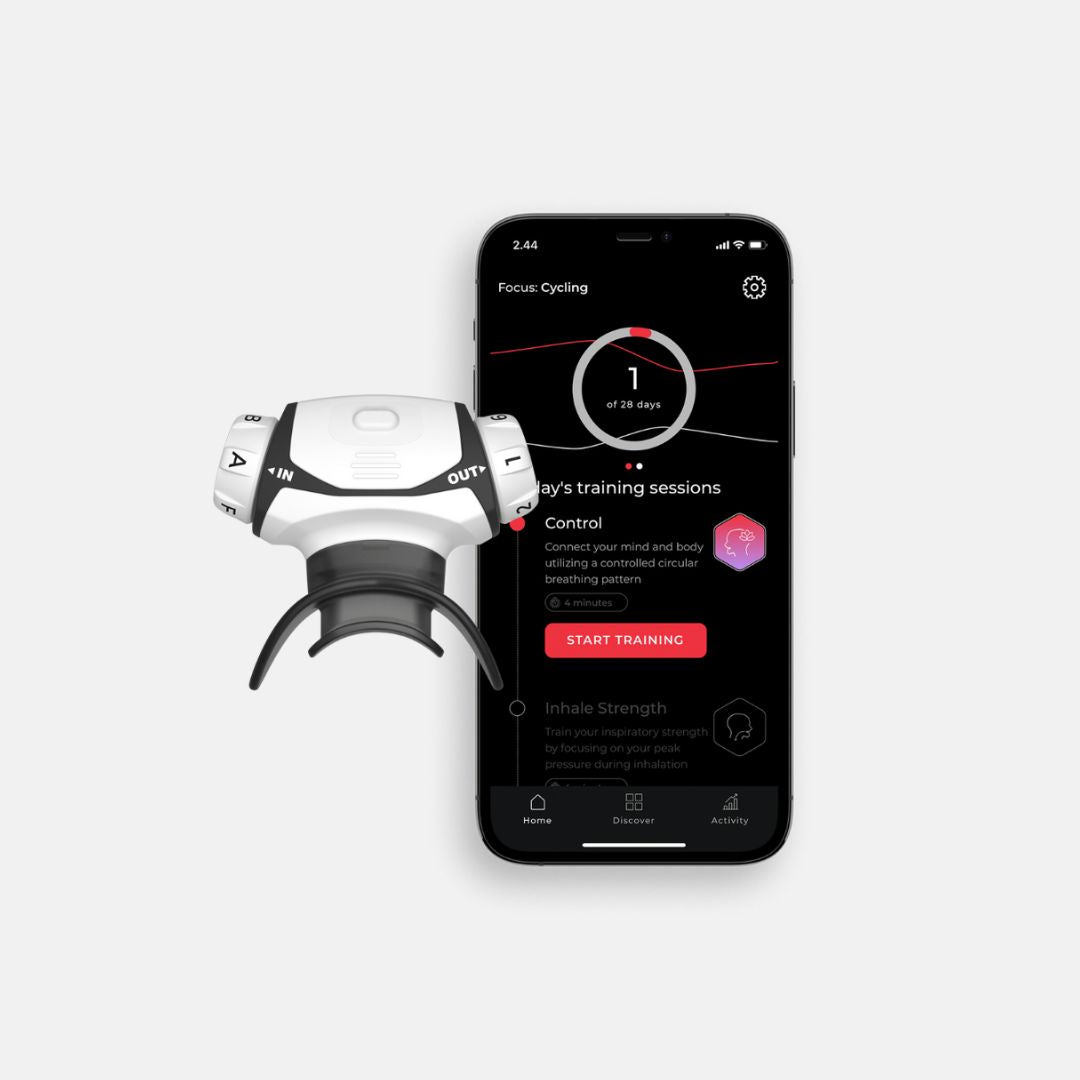
Breath training is the secret tool for your HYROX performance, and is too often overlooked. Good breathing helps you move better, recover quicker, and allow you to become more endurant. By simply training your breath 5 to 10 minutes a day, you can unlock new levels of performance at your next HYROX!