











Have you heard of Stress Awareness Month? Created in 1992, this annual, month-long campaign is held every April to increase public awareness about both the causes and cures of stress.
Stress Awareness Month is a good reminder to pause, reset and explore practical ways to regain control of our calm. Indeed for many people, stress is not just an occasional inconvenience but a daily reality. Whether it’s deadlines, constant notifications or simply the pace of modern life, it can quickly overwhelm body and mind.
But one of the most powerful tools for managing stress is something you already do every single day: breathing.
 Why stress hits both mind and body
When you’re under stress, your body activates the “fight-or-flight” response. This triggers unpleasant physiological changes: your heart rate increases, muscles tighten and stress hormones like cortisol rise. Over time, chronic activation of this system can lead to fatigue, anxiety, poor focus and even long-term health issues.
According to the American Psychological Association (Stress in America, 2025), at least two-thirds of Americans say their stress manifests as physical symptoms, with the most common ones being nervous or anxious feelings, fatigue and headaches. Life can be stressful, and the challengeisn’t simply avoiding stress butlearning how to respond to it effectively.
Breath training: a natural way to reset
Breath training works with your body’s natural systems to counteract stress. By improving how you breathe, you can influence your nervous system, helping your body shift from a heightened state of alertness to one of control and calm.
Slow, controlled breathing stimulates the vagus nerve, which activates the parasympathetic nervous system (the part responsible for relaxation). This means you can feel calmer within seconds, even in high-pressure situations.
The science behind breath training for stress
- Lower respiratory rate
- Reduced cortisol levels
- Improved blood pressure
- Enhanced cognitive regulation
These translate into real-world benefits: clearer thinking, improved focus and a better sense of control.
From tension to calm: what breath training can achieve
Stress doesn’t just stay in your head. It shows up in your body, from tight shoulders to shallow breathing and fatigue. With consistent breath training, and particularly diaphragmatic training, you can:
- Reduce physical tension and relax muscles
- Stay centered under pressure
- Build mental resilience
- Lower your heart rate
- Calm your overall nervous system
A 2019 Joanna Briggs Institute study found that diaphragmatic breathing can be a widely utilized intervention for physiological and psychological stress reduction.
Diaphragmatic training creates a powerful shift overtime, built over habit, offering the ability to respond to stress with control instead of the automatic “fight-or-flight” mode.
 An alternative to medication
While medication can be necessary in some cases, breath training offers a holistic and natural way to manage everyday stress and anxiety, as shown in this 2015 study proposing breathing techniques to be used as first-line and supplemental treatments for stress, anxiety, depression and some emotional disorders. Breath training doesn’t mask symptoms but helps regulate the physiological processes driving them.
This makes it a valuable complement to other wellness practices, as breath training supports both mental and physical health.
Making breath training a habit
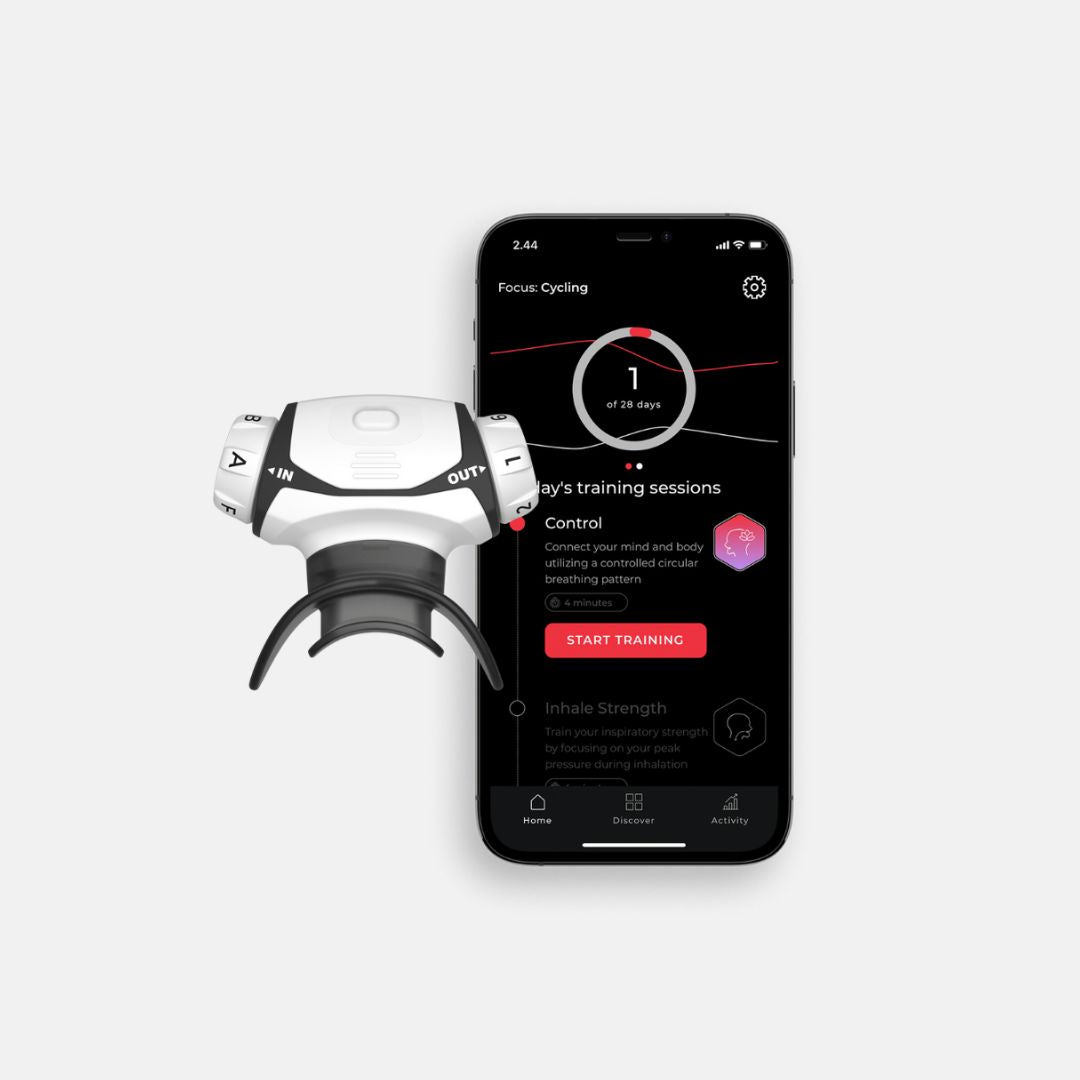
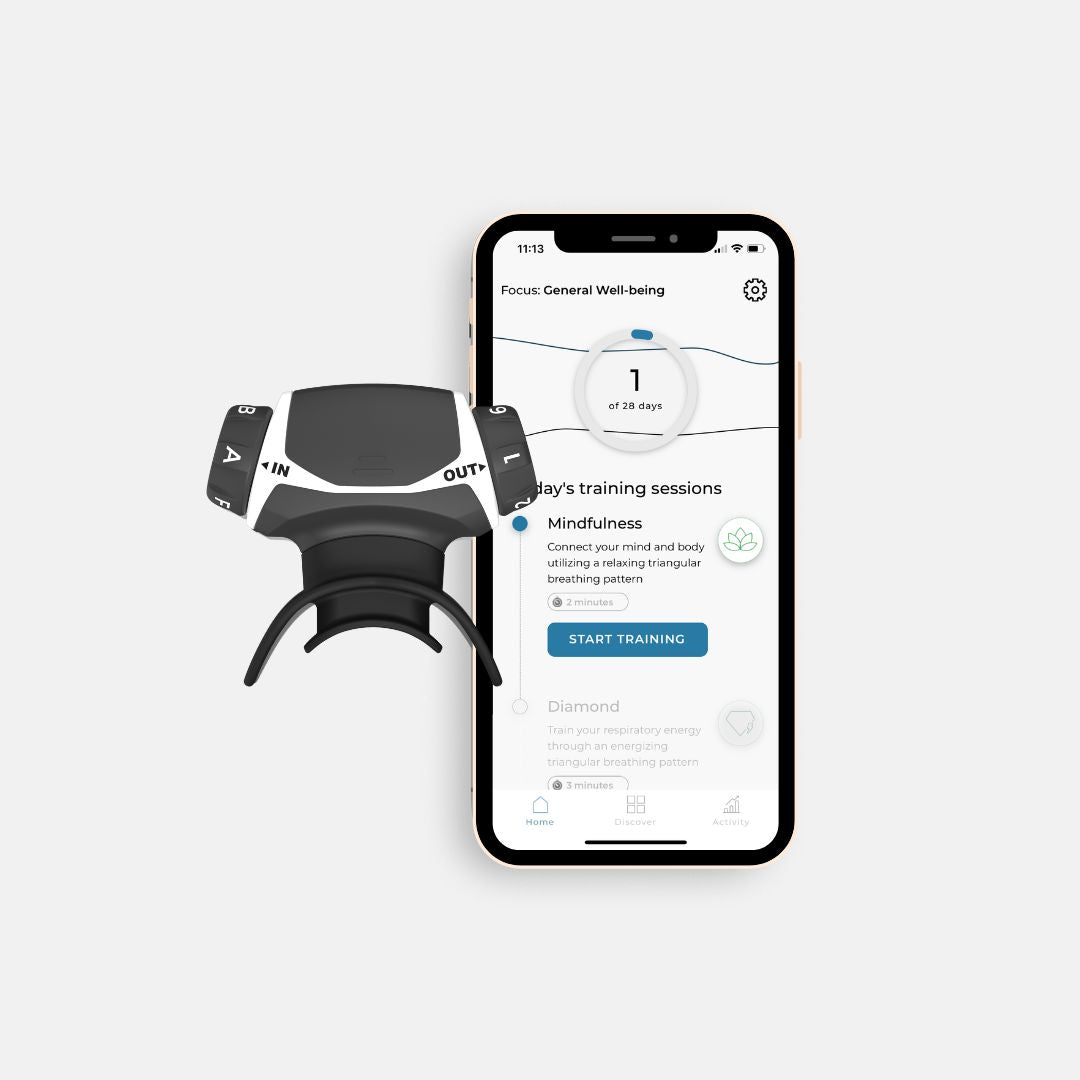
The benefits of breath training grow with consistency, just like any other skill. Even five minutes a day can make a noticeable difference overtime. Paired with personalized exercises, real-time feedback and measurable improvements, breath training can become an engaging and sustainable habit.
In fact, Airofit users who focus on stress and anxiety have reported increased awareness of their breathing patterns and improved ability to manage stress over time.
By integrating breath training into their daily routine, people have also noticed improvements beyond stress reduction, such as:
- Better focus and mental clarity
- Increased energy levels
- Improved sleep quality
- Enhanced overall wellbeing
Users also report improvements in physical performance and respiratory strength.
This Stress Awareness Month, consider starting with a new small habit. By learning to control your breath, you gain a powerful tool to steady your mind, relax your body, and stay focused under pressure.
Disclaimer: While the Airofit breathing trainer might assist with respiratory issues, Airofit is not a medical device nor made for treating illness.